Designing for Learning: How Architectural & Interior Design Shapes Sri Lanka’s Universities
Architectural design for educational institutions in Sri Lanka shapes how students learn, how long they stay engaged on campus, and how an institution is perceived by prospective students, parents, and accreditation bodies.
ARA’s work with Curtin Colombo and the SLIIT Library shows how flexible, durable, and community-focused design turns campus buildings and libraries into genuine assets for a university or institute.
Key takeaways:
- A campus or library is often a prospective student’s first real impression of an institution – before they read a prospectus or check a ranking.
- Good learning space design keeps students on campus longer and strengthens community, which supports retention.
- ARA’s education projects prioritise flexibility, durability, wayfinding, and community spaces – the four things that matter most for high-traffic academic buildings.
- Curtin Colombo and the SLIIT Library are two ARA projects that show what this looks like in practice.
- Institutions should brief architects around long-term flexibility, maintenance budgets, wayfinding, and academic-calendar phasing – not just opening-day appearance.
For Sri Lanka’s universities, international campuses, and institutes, the building itself has become part of the brand.
At ARA, our work in the education sector – including Curtin Colombo and the SLIIT Library – has shown us how thoughtful design choices ripple outward, shaping everything from day-to-day student wellbeing to an institution’s competitive position in a crowded market.
Why Campus and Library Design Shapes Student Experience and Institutional Reputation
Sri Lanka’s higher education landscape has never been more competitive. Local universities, international branch campuses, and private institutes are all courting the same pool of students and families – many of whom are weighing local options against the cost of studying abroad.
In that environment, the physical campus is doing more work than most administrators realise. A tour of the building is often a prospective student’s first real impression of an institution, long before anyone reads a prospectus or checks a ranking.
Beyond first impressions, learning space design has a measurable effect on how students engage day to day. Comfortable, well-lit study areas keep students on campus longer, which strengthens the sense of community institutions work hard to build.
Libraries especially have shifted from quiet storage halls into the social and academic heart of campus – where group projects happen, where students find each other, and where an institution’s culture is most visible to visitors.
Get campus architectural design in Colombo right, and the building starts doing some of the recruitment, retention, and brand-building work for you.
ARA’s Approach to Designing for Education: 4 Priorities
Education projects come with a distinct set of demands. ARA’s approach to university interior design in Sri Lanka is shaped by four priorities that come up on every brief:
- Flexibility. Lecture halls become exam halls become event spaces; a library reading room on a Tuesday afternoon might be a workshop space on a Friday evening. Modular furniture, movable partitions, and multi-use layouts mean institutions get more value from every square metre without renovating every time a programme or timetable changes.
- Durability. Campuses see a volume and intensity of daily use that few other building types experience – hundreds or thousands of students moving through the same corridors, common areas, and study halls every day. Materials and finishes have to be chosen for that reality from day one, balanced against a realistic institutional maintenance budget.
- Wayfinding. Between multiple buildings, departments, and shared facilities, a confusing layout creates daily friction for students, staff, and visiting parents. Good wayfinding is partly signage, but it starts with the architecture itself – sightlines, landmark spaces, and a layout that makes sense intuitively.
- Community spaces. Corridors, courtyards, breakout areas, and library commons are where a lot of real learning – and the relationship-building that keeps students enrolled – actually happens. Designing these spaces with as much care as a lecture hall signals what an institution values.
Project Spotlight: Curtin Colombo
Curtin Colombo, located on Nawam Mawatha in the heart of Colombo, gave ARA the opportunity to rethink what an academic building can look like – without losing the qualities that make a place of learning feel serious and purposeful.
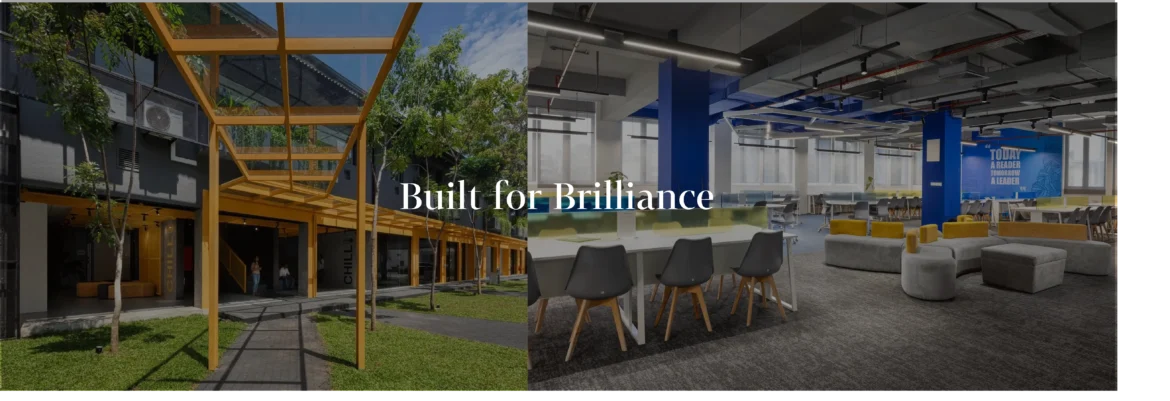
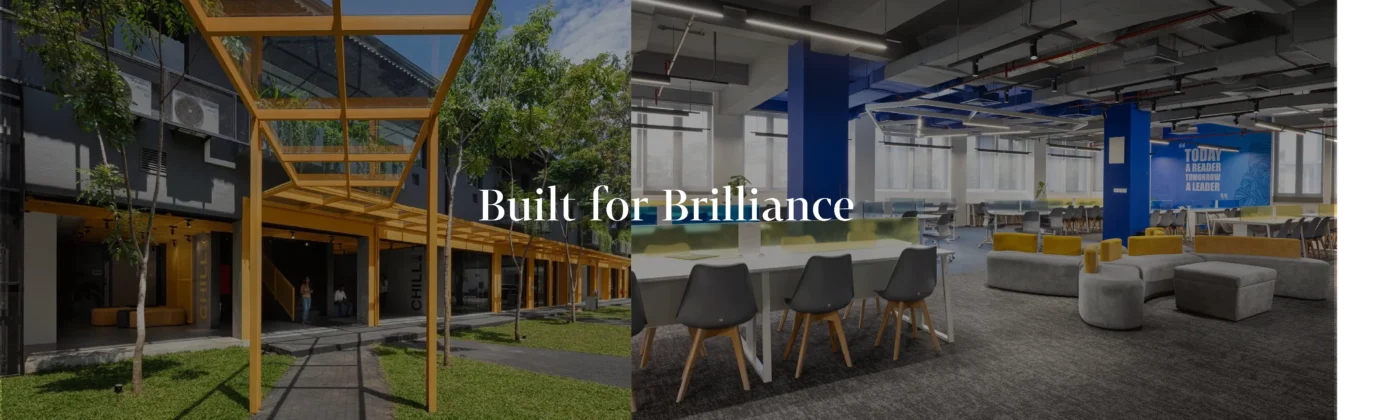
The facade makes the first statement: an arbitrary pattern of metal squares overlays the building’s brutalist form, preserving its strong geometric lines while giving the exterior a distinctive identity. The palette pairs black with buttercup yellow – the black lends formality, sophistication, and quiet authority; the yellow brings energy, optimism, and approachability. Inside, exposed cement, clean lines, and box-like forms continue the brutalist language, while touches of orient blue in lobbies and relaxing areas introduce calm. Open hallways and floor-to-ceiling glass flood the interior with natural light, making the building feel welcoming despite its bold exterior – a strong reference point for institutions thinking about their own campus identity.
Project Spotlight: SLIIT Library – “Where Beauty Meets Brains”
The brief for the SLIIT Library in Malabe could be summed up in one line: where beauty meets brains. The goal was library interior design in Sri Lanka that goes beyond appearances – a space that inspires students to connect with their community and support each other in their studies, rather than simply housing books and desks.
That brief shaped every decision. Instead of rows of identical study carrels, the library is organised around a mix of settings – quiet individual study zones alongside social, collaborative areas – so students can choose the environment that suits the work they’re doing that day. Materials, lighting, and layout work together to make the space feel calm and focused without feeling sterile, encouraging the informal interaction that often leads to better academic outcomes. The result is a library that functions as a genuine hub of campus life.
A Checklist for Briefing an Architect or Interior Designer
Administrators and facilities or estates managers preparing a brief should work through these questions early:
- Long-term flexibility – How will this space need to be used in five or ten years, not just on opening day? Is the layout flexible enough for programmes, technologies, or student numbers not yet decided?
- Maintenance budget – Have materials been chosen for the high-traffic nature of academic buildings, with a realistic maintenance budget in mind?
- Wayfinding – How will students, staff, and visitors navigate between buildings and departments? Is wayfinding part of the architecture, not an afterthought?
- Institutional identity – Does the design reflect the institution’s identity and values? As Curtin Colombo and the SLIIT Library show, a campus or library is one of the most visible expressions of what an institution stands for.
- Phasing around term time – How will construction or renovation be phased around the academic calendar to minimise disruption to students and staff?
Institutions that answer these questions early tend to end up with buildings that serve them well for decades – not just for the first intake.
Frequently Asked Questions
What does architectural design for educational institutions involve?
Architectural design for educational institutions covers everything from campus layout and building facades to classroom and library interiors. It balances flexibility for changing programmes, durability for high-traffic daily use, clear wayfinding between buildings, and community spaces – while reflecting the institution’s identity and supporting student wellbeing.
Why does library interior design matter for Sri Lankan universities?
A well-designed library shifts from a quiet storage hall into the social and academic heart of campus. Good library interior design supports both focused individual study and collaborative group work, helping students stay engaged, connect with peers, and build the sense of community that improves retention.
What should a university consider when planning campus architecture?
Universities should plan for long-term flexibility, not just opening-day appearance – spaces that can adapt as programmes and student numbers change. They should also budget realistically for maintenance given heavy daily use, design clear wayfinding between buildings, and phase construction around the academic calendar.
How long does a university or library design project take in Sri Lanka?
Timelines vary with project scope, but campus and library projects typically progress through design development, detailed planning, and phased construction or fit-out – often scheduled around academic terms to minimise disruption. Early, clear briefing on priorities helps keep projects on schedule.
What makes a learning space design effective?
Effective learning space design gives students a choice of settings – quiet study zones alongside collaborative areas – with good natural light, durable materials, and intuitive wayfinding. It supports how students actually use a building day to day, not just how it looks on opening day.
Let’s Talk About Your Campus or Library Project
Whether you’re planning a new campus building, refurbishing a library, or rethinking how your institution’s spaces support students and staff, ARA brings both design vision and an understanding of the practical realities of education sector projects. Get in touch to discuss how thoughtful Architectural and Interior Design can shape the next chapter of your institution’s story.